

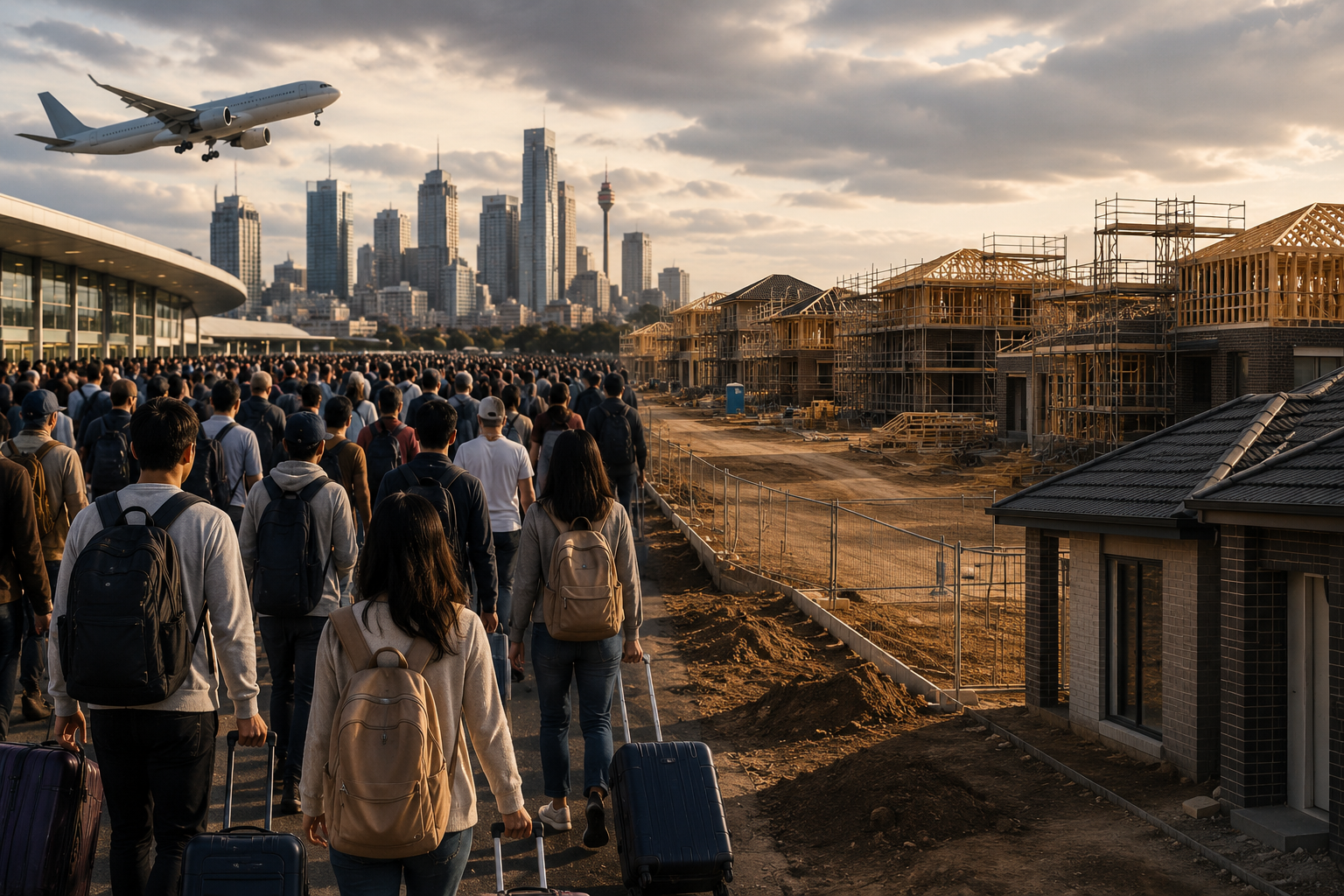
Australia’s migration intake continues to exceed the supply of new housing, according to new analysis by the Institute of Public Affairs (IPA), which argues that the federal government’s efforts to ease housing pressures through lower migration have not yet delivered the desired results.
Using data from the Australian Bureau of Statistics (ABS), the IPA found that Australia added 174,500 new homes in the year to March 2026, while net permanent and long-term overseas arrivals reached 489,300 during the same period.
In the March 2026 quarter alone, housing supply increased by 54,200 dwellings, compared with 193,780 net overseas arrivals.
IPA Senior Fellow Dr. Kevin You said the figures reveal a significant gap between population growth and housing construction.
“The latest data shows that net overseas arrivals were nearly three times higher than the number of new homes built during the year to March 2026,” he said.
Dr. You also noted that housing construction remains below levels seen a decade ago. In the year to March 2016, Australia built 204,400 dwellings—around 14.6 per cent more than current levels.
Meanwhile, migration has almost doubled over the same period. Net migrant arrivals rose from about 247,000 in 2016 to nearly 486,000 in 2026.
“We are building fewer homes than we were ten years ago, while migration has reached record levels. This is making it harder for young Australians to buy or rent a home,” Dr. You said.
ABS figures show Australia’s population grew by 412,500 people in the year to December 2025, reaching 27.8 million. Net overseas migration accounted for most of that growth, while natural increase (births minus deaths) contributed 111,500 people.
The federal government maintains that migration is already declining from the high levels seen after the pandemic.
Treasurer Jim Chalmers said migration has “moderated substantially” since Labor came to office and is expected to fall further in coming years.
Similarly, Home Affairs Minister Tony Burke said migration has fallen by 45 per cent from its 2023 peak and is projected to continue declining.
However, IPA research fellow Saxon Davidson argued that the government has limited incentive to reduce migration significantly while economic growth remains weak.
He said strong migration has helped support Australia’s economy and suggested that cutting migration sharply could increase the risk of recession.
The issue is likely to remain a major political debate, with the Coalition and One Nation arguing that rapid population growth is placing pressure on housing, infrastructure and public services.
One Nation leader Pauline Hanson has blamed current immigration levels for worsening the housing shortage, while Opposition Leader Angus Taylor has proposed linking migration targets more closely to housing construction and tightening visa compliance measures.
Although migration levels have fallen from their post-pandemic peak, critics argue that housing construction is still not keeping pace with population growth, adding pressure to Australia’s already strained housing market.