

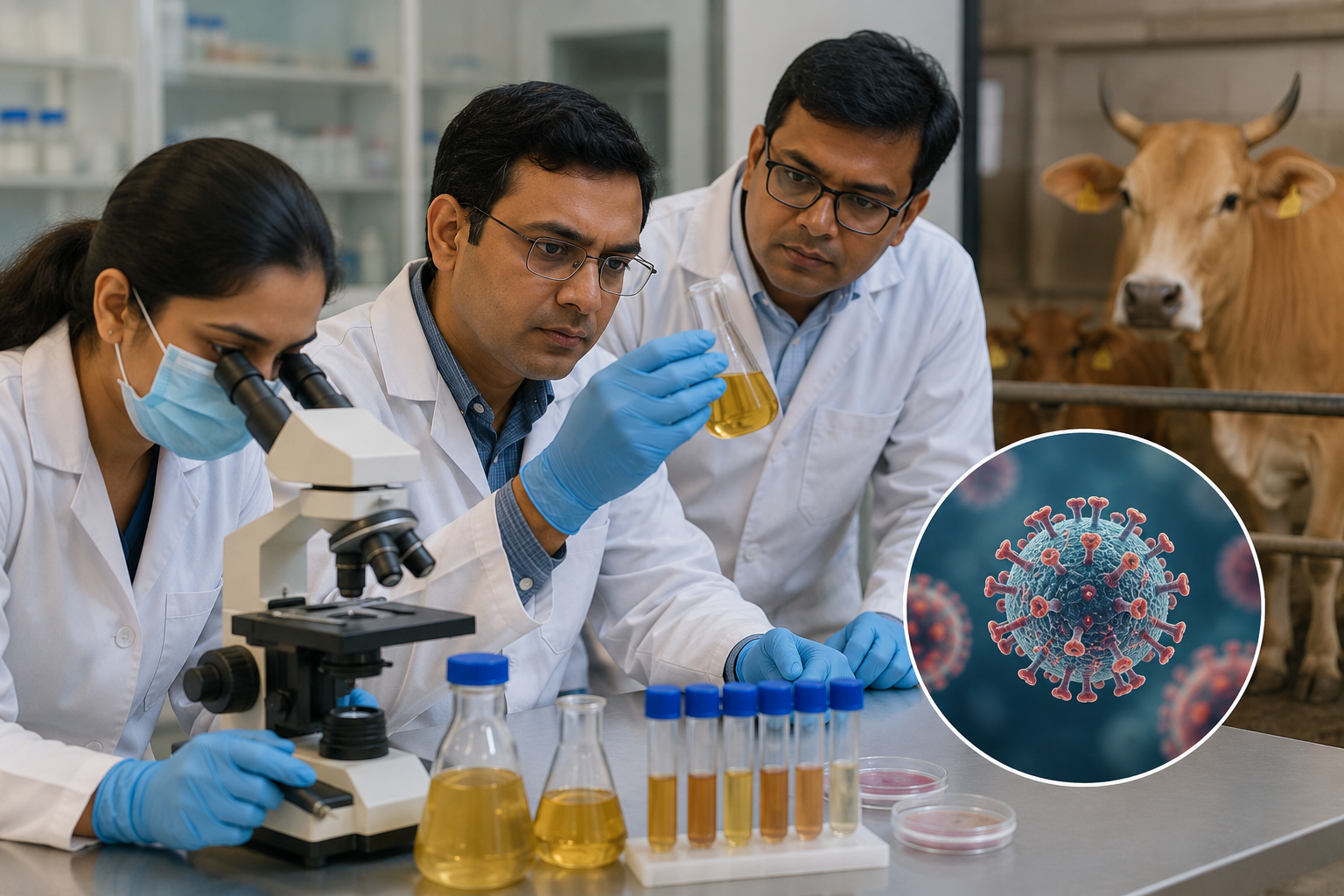
Researchers at the Indian Institute of Technology Roorkee (IIT Roorkee) have identified bioactive compounds in Ayurvedic cow urine distillate, known as Gau Mutra Ark, that demonstrated strong antiviral activity against the Chikungunya virus in laboratory studies.
The research, led by Professor Shailly Tomar and her team from IIT Roorkee’s Department of Biosciences and Bioengineering, found that the distillate reduced Chikungunya virus levels by more than 90 percent at safe concentrations.
Even more promising results were observed when the distillate was combined with thymoquinone, a natural compound found in Nigella sativa (black seed), and piperine, an active component of black pepper. The optimized formulation achieved a 99.85 percent reduction in viral load under laboratory conditions.
The study, published in the scientific journal ACS Agricultural Science & Technology, was conducted in collaboration with researchers from Ayurveda and biomedical institutions across India.
Using advanced techniques including virology, metabolomics, molecular docking, and biochemical analysis, the scientists identified benzoic acid, hippuric acid, and oleic acid as key compounds responsible for the antiviral effects.
According to the researchers, these compounds may disrupt vital viral proteins involved in replication, making them potential candidates for future antiviral drug development.
IIT Roorkee Director Professor Kamal Kishore Pant said the study highlights the importance of combining traditional knowledge with modern scientific research.
“Emerging and re-emerging viral diseases require innovative, affordable, and scientifically validated solutions,” he said. “This research reflects IIT Roorkee’s commitment to interdisciplinary science that bridges traditional knowledge systems and modern biotechnology.”
Professor Tomar noted that the findings provide a foundation for future investigations into natural antiviral therapies.
“Our study identifies specific bioactive molecules in Ayurvedic Gau Mutra Ark that contribute to antiviral activity and demonstrates the effectiveness of synergistic natural formulations,” she said. “However, further pre-clinical and clinical studies are necessary to determine their therapeutic potential in humans.”
Chikungunya is a mosquito-borne viral disease spread primarily by Aedes mosquitoes. It causes symptoms such as high fever and severe joint pain and can lead to long-term health complications in some patients. Currently, treatment options remain limited.
The researchers emphasized that the results are based on laboratory experiments and that additional pre-clinical and clinical trials will be required before any human treatment can be developed.
The study was supported by India’s Ministry of AYUSH and underscores growing scientific interest in exploring natural bioactive compounds as potential healthcare solutions.