

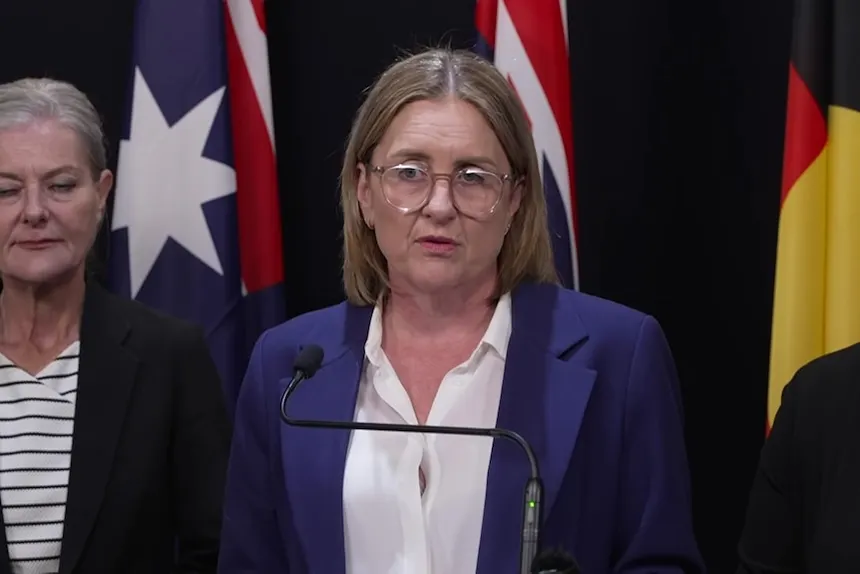
Victorian Premier Jacinta Allan is under growing political pressure after a new poll suggested Labor has slipped behind both the Coalition and One Nation ahead of the state election due in November.
A freshwater strategy survey, conducted for the Herald Sun between June 5 and 8, shows Labor’s primary vote has dropped to 23%, down four points since March and well below its 2022 election performance.
In comparison, the Coalition sits on 27%, while One Nation has risen sharply to 25%, placing it ahead of Labor in primary support.
On a two-party-preferred basis, the Coalition leads Labor 53–47, a result that would point to a significant defeat for the current government if replicated at the ballot box.
The polling also indicates strong voter dissatisfaction with the Premier, with 62% of respondents saying Labor should change its leader before the election. Among Labor voters, opinion is split, with 53% supporting Allan to remain while 39% favour a leadership change.
Allan’s personal ratings have also weakened, with a net favourability of minus 37. In contrast, Opposition Leader Jess Wilson is rated more positively and leads Allan as preferred premier by a wide margin.
The results have intensified internal Labor discussions about leadership, although there is no formal move to replace her. Deputy Premier Ben Carroll has been identified as a possible alternative, with modelling suggesting a small potential lift in support if he were to take over, though analysts warn a leadership switch would not instantly resolve the party’s broader challenges.
Freshwater Strategy researchers say Allan has become a drag on Labor’s vote, while also noting that any successor would still be relatively unknown to many voters.
The polling reflects a broader trend of declining support for Victorian Labor after more than a decade in power. It also highlights the rise of One Nation as a significant force in the state, particularly in outer suburban and working-class areas, where cost-of-living concerns appear to be driving voter shifts away from traditional major parties.
While the government has faced criticism over issues including housing, crime, debt, and public services, Allan has also dealt with separate controversy over a Melbourne billboard campaign targeting her with sexist messaging, which drew condemnation from political leaders across parties.
With the election approaching, Labor now faces increasing pressure to stabilise its support, either by continuing with Allan or considering a leadership change, as the contest becomes more competitive and unpredictable with the growing influence of minor parties.