

RBA holds interest rates steady, but mortgage holders face ongoing uncertainty
Australia’s central bank has left interest rates unchanged, offering temporary relief to millions of mortgage holders. However, experts warn borrowers may still face challenges ahead as inflation remains stubbornly high and further rate hikes have not been ruled out.
The Reserve Bank of Australia (RBA) decided to keep the cash rate at 4.35 per cent, ending concerns of a fourth consecutive increase. The decision was unanimous, with the RBA board citing signs of slower consumer spending, rising unemployment and falling house prices in some capital cities.
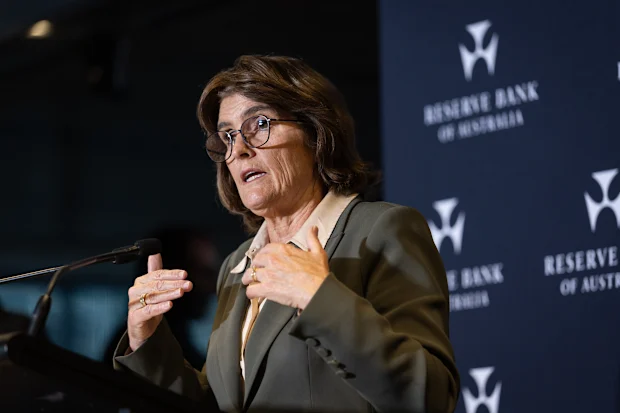
Despite the pause, RBA Governor Michele Bullock stressed that inflation remains above the bank’s target and warned that additional rate increases could still be necessary if price pressures fail to ease.
In its monetary policy statement, the RBA said it remained committed to restoring price stability and maintaining employment, noting it would take whatever action was required, including raising interest rates further if needed.
Financial comparison website Finder reported that 55 per cent of economists surveyed still expect at least one more rate hike before the end of the year, with many predicting the next move could come as early as August.
“Borrowers will welcome this pause, but they’re not out of the woods yet,” said Finder home loan expert Richard Whitten.
“The cash rate is still at its highest level in years, and our data shows 40 per cent of homeowners were struggling with mortgage repayments in May, up from 35 per cent at the start of the year.”
Global events are also adding to uncertainty. While hopes of a US-Iran peace agreement have improved sentiment, economists say the economic effects of recent disruptions in the Middle East, particularly around oil supplies through the Strait of Hormuz, may continue to fuel inflation for months.
Oxford Economics’ head of economic research and global trade, Harry Murphy Cruise, said falling oil prices would only have a limited impact on inflation.
“The inflationary effects of the oil price shock are still filtering through the economy,” he said. “Higher transport, shipping and production costs continue to place pressure on consumer prices.”
The RBA acknowledged that inflation is likely to remain elevated for some time. Annual consumer inflation eased to 4.2 per cent in April from 4.6 per cent in March, but underlying inflation, measured by the trimmed mean, edged up to 3.4 per cent.
Bullock said economists remain divided on the direction of future interest rates, with some forecasting cuts next year while others expect further increases.
“I can’t rule out that if inflation doesn’t respond as we expect, we may have to do more,” Bullock said.
Australia’s economy grew by just 0.3 per cent in the most recent quarter, but Bullock rejected suggestions the country was heading into recession.
“We want to slow the economy enough to bring inflation back to target while keeping employment as strong as possible,” she said.
Treasurer Jim Chalmers welcomed the RBA’s decision, saying the steady rate was reassuring for households.
“It doesn’t make life easier, but importantly, it doesn’t make life harder,” he said.