

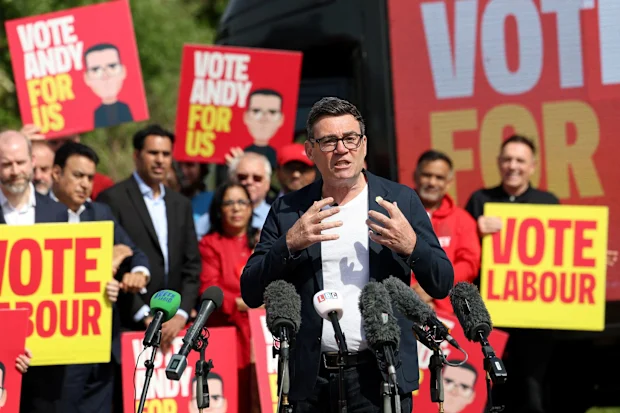
Greater Manchester Mayor Andy Burnham is set to return to the UK Parliament after winning a by-election in Makerfield, a victory that has fuelled speculation he could challenge Prime Minister Keir Starmer for the country’s top job.
The by-election was widely seen as a pathway for Burnham to re-enter Westminster politics. Although one of Britain’s most popular politicians, he had previously been unable to contest Labour’s leadership because he was not a sitting Member of Parliament.
Burnham’s return comes at a difficult time for Starmer. Two years after Labour’s landslide general election victory, the Prime Minister’s popularity has declined sharply. Meanwhile, support for Nigel Farage and his Reform UK party, as well as the Green Party, has risen in opinion polls.
Supporters of Burnham argue that he is the only Labour figure capable of reversing the party’s declining fortunes. His decisive victory in Makerfield, achieved just weeks after Labour suffered heavy losses in local elections, has strengthened his standing within the party.
Following the result, some Labour MPs renewed calls for Starmer to step aside, although Burnham avoided directly discussing any leadership ambitions.
“Everyone knows that politics isn’t working,” Burnham said after the election result was announced. “Everyone can feel that the country isn’t where it should be. Tonight could just be the turning point.”
Starmer has previously insisted he would fight any leadership challenge. However, recent reports in British media suggest that allies of the Prime Minister believe he may be prepared to resign rather than face a divisive contest. Starmer spent the weekend with his family at the prime ministerial retreat, Chequers, amid growing speculation about his future.
Burnham has largely avoided the internal Labour Party conflicts that dominated the years following the leadership of Jeremy Corbyn. While he briefly served in Corbyn’s shadow cabinet, his role as Greater Manchester mayor allowed him to remain somewhat detached from the party’s factional disputes.
As mayor, Burnham built a reputation for standing up to Westminster, particularly on issues highlighting the economic and political divide between northern and southern England. His advocacy earned him the nickname “The King of the North.”
Over recent years, Burnham has become one of Britain’s most popular politicians. Despite often presenting himself as an outsider to Westminster politics, he has spent much of his career within the political establishment. He became a parliamentary researcher at 24, a special adviser at 28, and an MP at 31.
During his 16 years in Parliament, Burnham served in the governments of both Tony Blair and Gordon Brown, eventually becoming Health Secretary. He also unsuccessfully contested the Labour leadership in 2010 and 2015, with the latter race being won by Corbyn, whose victory shifted the party significantly to the left.
Burnham’s parliamentary comeback has now placed him firmly at the centre of Britain’s political debate, with many watching closely to see whether he will launch a challenge for Labour’s leadership and potentially the prime ministership.