

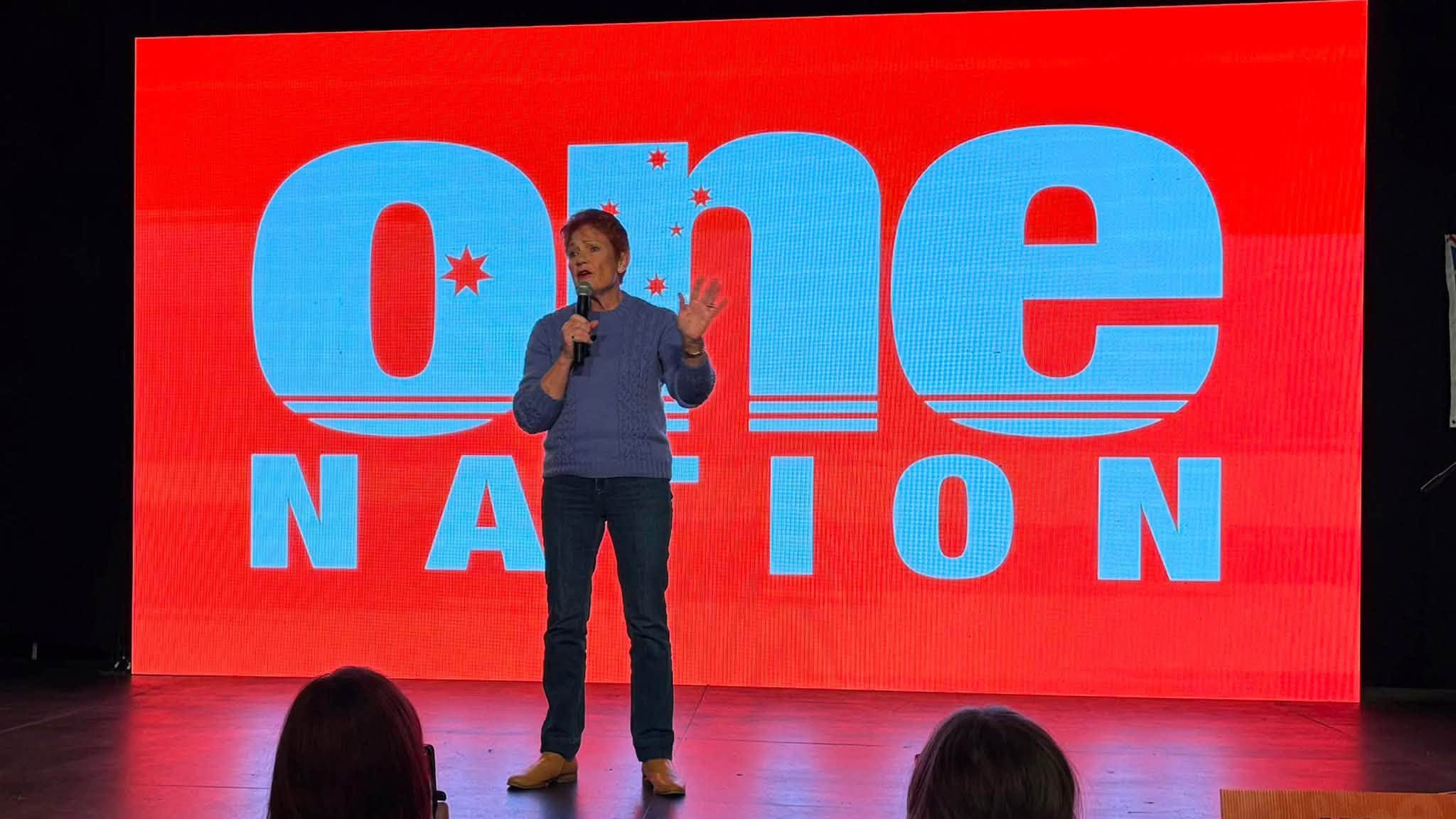
Pauline Hanson surpasses Albanese as preferred PM in shock poll result
Pauline Hanson has overtaken Prime Minister Anthony Albanese as Australia’s preferred prime minister in a surprising new national poll, highlighting the growing momentum of One Nation and increasing pressure on both major political parties.
Hanson leads the preferred prime minister rankings with 33 per cent support, ahead of Albanese on 29 per cent and Opposition Leader Angus Taylor on 16 per cent.
The poll also found One Nation attracting 29 per cent of the primary vote, narrowly ahead of Labor on 28 per cent, while the Coalition trails on 20 per cent.
The results come amid heightened attention on One Nation following a major fundraising campaign, protests outside party events, and controversy surrounding a neo-Nazi supporter who appeared outside a Melbourne fundraiser.
Hanson quickly distanced herself from the extremist figure, insisting neo-Nazis were with the “wrong party” and rejecting any suggestion that One Nation welcomes such support.
The controversy followed a fundraising event featuring Hanson and former Deputy Prime Minister Barnaby Joyce. The event was moved from Moonee Ponds to South Melbourne after planned protest action.
Around 30 protesters gathered outside the venue, chanting slogans such as “Immigrants are welcome here, Nazis are not,” while police maintained a significant presence.
Victoria Police confirmed a 22-year-old man was directed to leave the area, with no arrests made.
The individual, identified as Michael Nelson, was recently convicted of offensive behaviour related to the disruption of an Anzac Day dawn service. Videos circulating online showed him making pro-Hanson remarks while being restrained by police outside the fundraiser.
Despite Hanson’s rejection of any association with extremist groups, political opponents have used the incident to criticise One Nation.
Shadow Treasurer Tim Wilson claimed the party was attracting extremists, while Climate Change and Energy Minister Chris Bowen accused One Nation of offering “anger, not answers” and “slogans, not solutions.”
Meanwhile, Hanson is attempting to convert her polling success into a broader national campaign against both Labor and the Coalition. One Nation’s “Fire the Liar” fundraising drive, targeting Albanese and Labor-held electorates, reportedly raised more than $3 million in less than three days from over 50,000 donors.
The party plans to use the funds for a nationwide advertising campaign across television, radio and billboards.
The poll results add further pressure on Albanese’s government as voters continue to express concerns about the cost of living, housing affordability, immigration levels, energy prices and economic uncertainty.
Resolve pollster Jim Reed said One Nation’s support appears to be expanding beyond its traditional conservative base, attracting some migrant and non-white voters concerned about population growth, housing pressures and public services.
This trend could pose challenges for both Labor and the Coalition.
One Nation appears to be drawing support not only from conservative voters but also from working-class and outer-suburban Australians who have become disillusioned with the major parties.
For the Coalition, the poll is equally concerning, with Angus Taylor lagging well behind Hanson and the party’s primary vote slipping to a low level.
The latest figures suggest Australia’s political landscape is becoming increasingly volatile, with One Nation positioning itself as more than a protest movement and seeking to challenge the dominance of the major parties.
However, Hanson’s growing popularity also brings increased scrutiny.
As One Nation moves further into the political spotlight, questions remain about how the party handles extremist supporters and whether its recent surge can withstand continued public and political examination.
While Hanson argues that One Nation is giving a voice to Australians who feel ignored by the political establishment, critics contend the party is fuelling division and attracting dangerous elements.
The new poll indicates that a growing number of Australians are willing to listen to Hanson—a development that would have seemed highly unlikely just a year ago. Whether that support endures may become one of the defining questions of Australia’s next federal election.