

Indian-Origin Researchers turn eucalyptus bark waste into pollution-capturing material
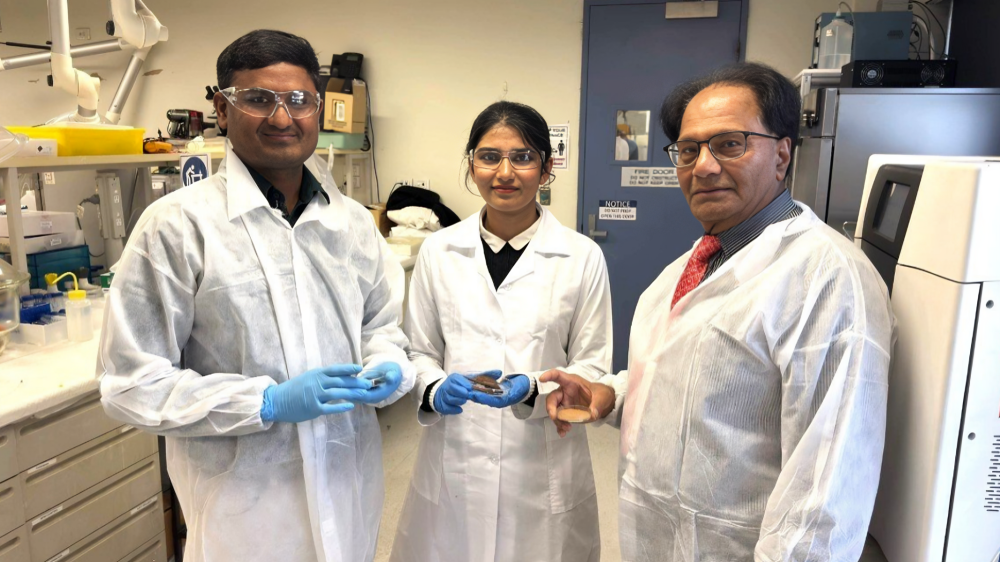
Researchers of Indian origin at RMIT University have developed an innovative method to convert eucalyptus bark waste into a highly porous carbon material capable of removing pollutants from air and water, offering a sustainable solution for environmental cleanup and waste utilisation.
The study was led by PhD researcher Pallavi Saini, along with senior researchers Deshetti Jampaiah and Suresh Bhargava. Their research demonstrates how forestry by-products, often considered low-value waste, can be transformed into high-performance materials through a simple activation process.
According to Saini, the team was surprised by the strong adsorption capabilities of eucalyptus bark. She said the waste material could be converted into a highly porous carbon with excellent pollutant-trapping properties using a straightforward production method.
Porous carbon materials are commonly used in filtration and purification systems because their microscopic pore networks can capture unwanted particles and molecules from air and water. The researchers’ technique streamlines manufacturing by using a single-step process, making it potentially more cost-effective than traditional multi-stage production methods.
Jampaiah highlighted that eucalyptus bark is an ideal raw material in Australia due to its abundance and renewable nature. He said the process transforms a readily available waste product into a functional carbon material without the need for complex processing.
The researchers also noted that future studies could involve collaboration with Indigenous knowledge holders to identify eucalyptus species best suited for advanced environmental technologies.
Bhargava said the research underscores the potential of converting waste materials into valuable products that can help address environmental challenges such as pollution and carbon emissions.
Published in the journal Biomass and Bioenergy, the study points to possible applications in water purification, air filtration, industrial gas treatment, and carbon dioxide capture. Further research will focus on durability testing and scaling up the technology for commercial use.
The findings contribute to a growing body of global research exploring biomass-derived carbon materials, particularly in countries such as Australia, where forestry waste remains an abundant and underused resource.